How It Works
AI-powered insect detection in four simple steps
Inside BuzzCopper
Take it apart
See how the detector fits together, part by part.
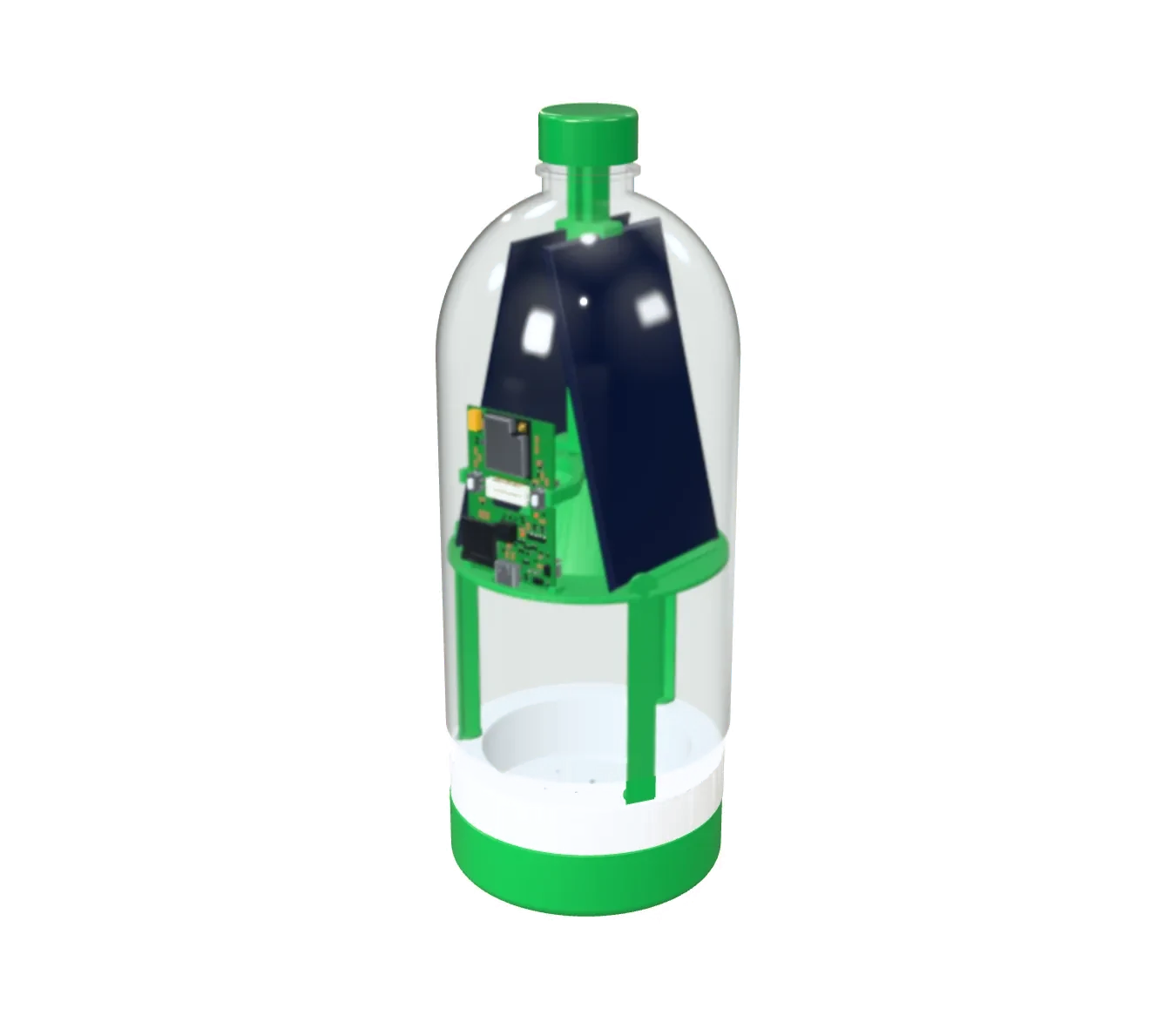
Parts of the device
-
An ordinary PET drinks bottle forms the trap’s clear outer shell. It is cut so a gap of about 10 mm is left between its open bottom edge and the white bait rim, which is how insects get into the trap.
-
The screw cap on top of the bottle. It comes with BuzzCopper rather than being the bottle’s original cap.
-
Keeps the spine secure, hanging from the top of the bottle.
-
The antenna for the device’s wireless connection.
-
Holds the BuzzCopper device inside the bottle.
-
Two small solar panels that recharge the battery.
-
A rechargeable lithium-ion cell (3.7 V, 12.95 Wh) that powers the device.
-
Holds the battery in place.
-
The central mounting point that everything else attaches to, including the camera.
-
Connect the base, with its electronics, to the bait pot below.
-
Holds the bait.
-
Floats on the bait and is where insects land. It’s white, so insects stand out clearly against it in the camera’s photos.
-
The white rim around the top of the bait pot. The gap between it and the bottle’s bottom edge is how insects get into the trap.
-
A single control board that runs the device. It carries an ESP32-S3 module, a camera connector, a microSD socket, a USB-C port and buttons.
Simple to deploy, intelligent by design
BuzzCopper uses machine vision and artificial intelligence to automatically detect Yellow-Legged Asian Hornets at bait stations. The device is solar-powered, requires no wiring, and can run autonomously for extended periods. It does need internet connectivity from time to time to upload detections and send alerts. When a detection occurs, the system alerts you via email with photographic evidence.
Step by Step
From setup to action
Deploy
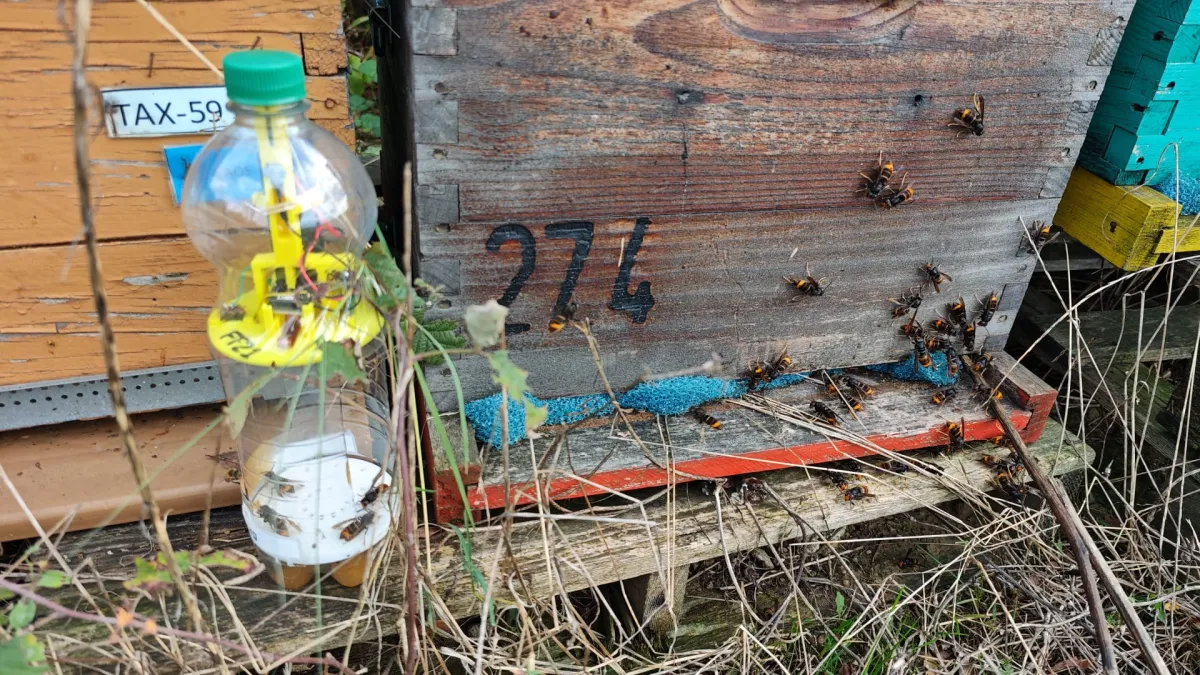
Place the BuzzCopper device in your garden or chosen monitoring site. The device is solar-powered with no mains electricity or wiring required. Position it where Asian Hornets are likely to forage, typically near bee hives or in sheltered garden areas.
Detect
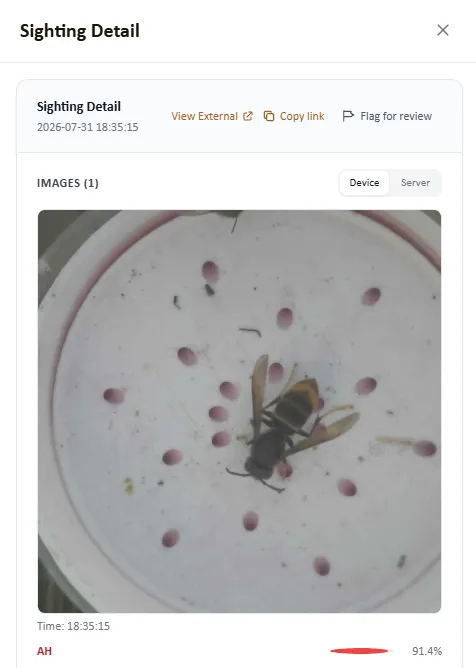
An integrated camera continuously monitors the bait station. The onboard AI model, running on an ESP32 microcontroller, regularly checks for visiting insects. The model has been trained to distinguish Asian Hornets from native species including European Hornets, common wasps, and honey bees. Between checks BuzzCopper sleeps to maximise battery life.
Get your sightings
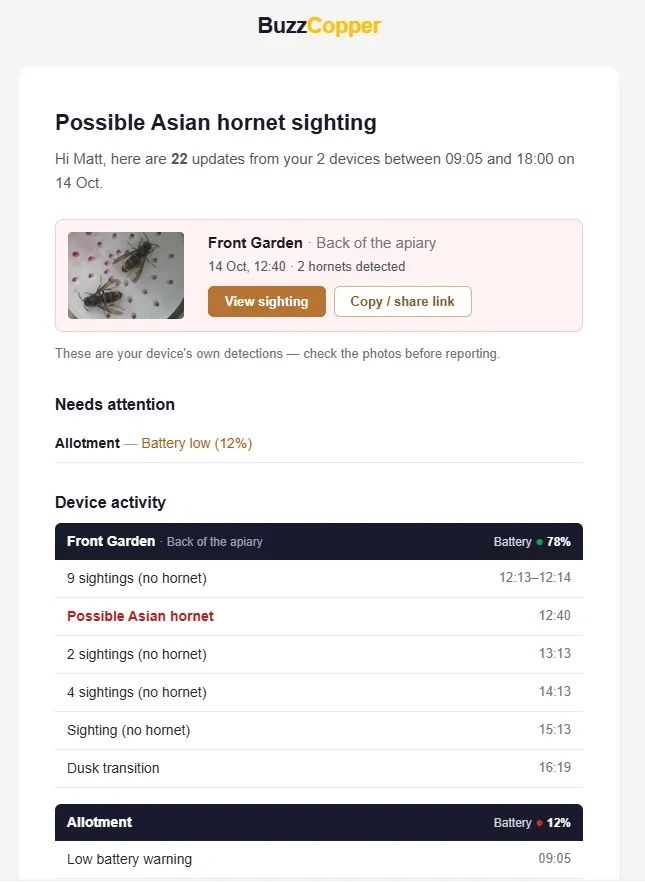
When the AI identifies a potential Asian Hornet, the device captures a photograph. How that sighting reaches you depends on the mode the device runs in (see below): in Garden mode it is sent straight away and you receive an email alert with the image, a confidence score and a timestamp; in Island and Field mode it waits on the device until you collect it with your phone.
Report
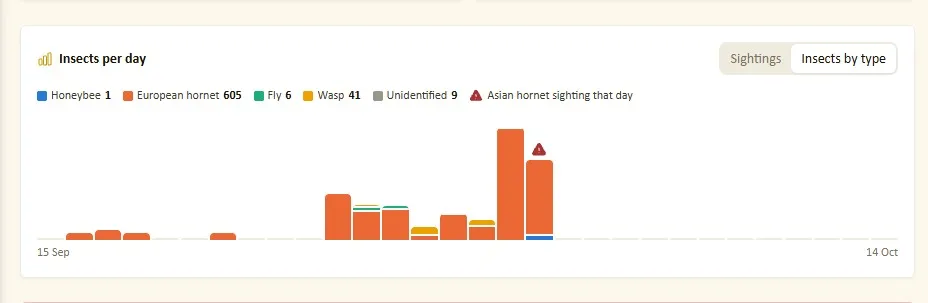
Forward the detection alert email, including the image, using the official iOS app, Android app, or the online reporting form. Early reporting is critical — it helps authorities locate and destroy nests before they become established.
Garden, Island or Field
Choose how it connects
BuzzCopper runs in one of a few modes, depending on whether your site has WiFi.
Garden mode
For sites with constant WiFi access, such as a garden. Sightings are reported to the server as they occur, so the email alert reaches you straight away. If the WiFi drops, detections are stored on the device and sent when it reconnects.
Island mode
For remote locations without WiFi. The device keeps its sightings, and you download them when you visit by connecting it to your phone’s mobile hotspot.
Field mode
In testing
Stores only Asian Hornet sightings on the device, ready to download over a mobile hotspot when you visit.
Under the Hood
Technical specifications
| Processor | ESP32-S3 with camera module |
| AI Model | Image classification model (trained using EdgeImpulse.com) |
| Firmware | C++ written by the BuzzCopper team |
| Power | Solar panel with rechargeable battery |
| Connectivity | WiFi (2.4GHz) — works offline with local storage |
| Camera | OV3660 3MP camera module |
| Housing | 3D printed plastic frame inside PET fizzy drinks bottle |
| Bait Platform | Floating design — zero by-catch |
| Alerts | Email notifications with images |
| Data | Images uploaded to Google Cloud Storage for reference |
Build Your Own
Free open-source designs
Download the 3D-printable frame parts, build instructions, and other resources to assemble your own BuzzCopper device.
Ready to deploy your own detection device?